
Turbomachinery does not operate as an isolated equipment package
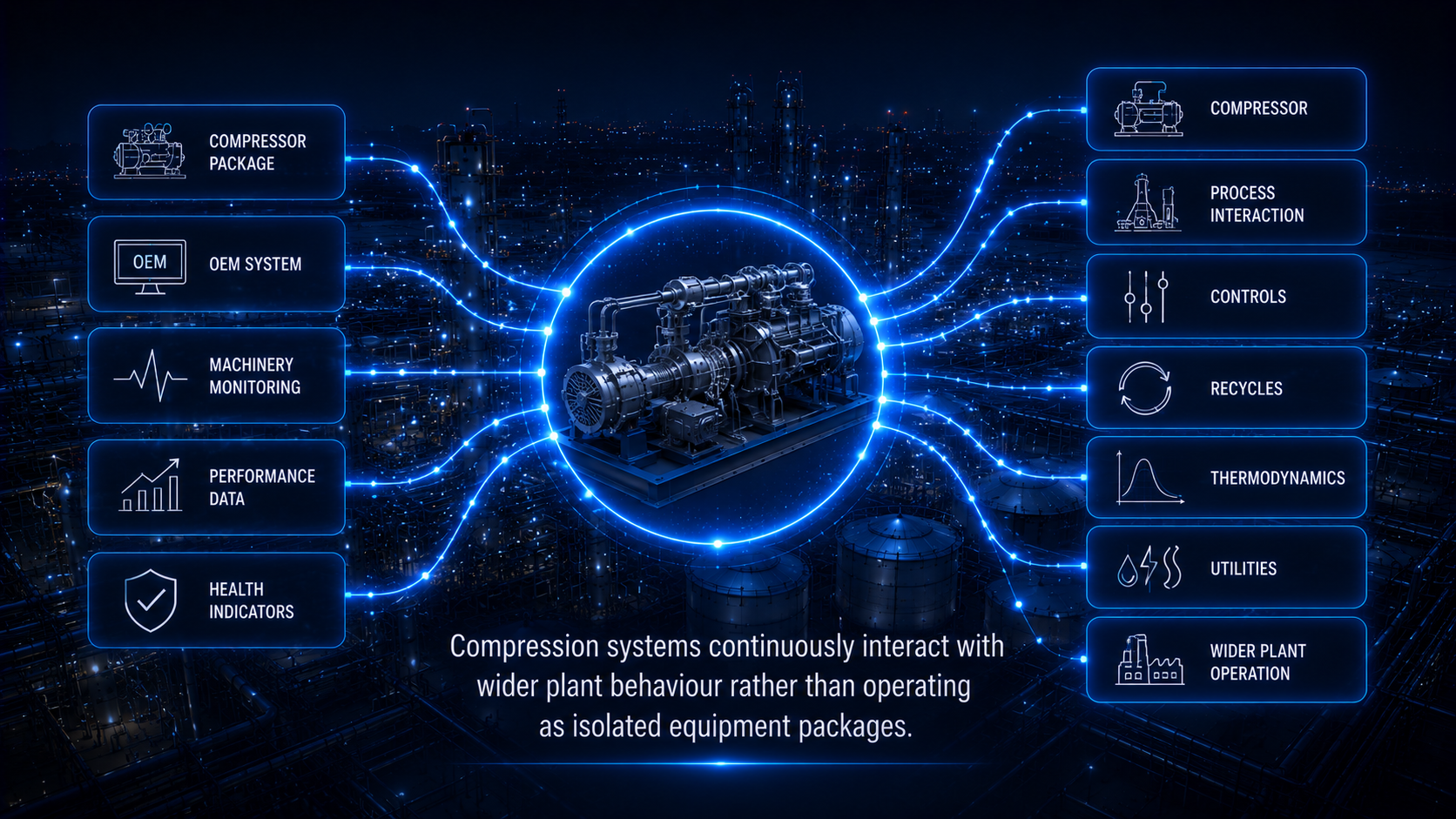
Condition-monitoring and vibration systems address mechanical condition. Plant-aware engineering addresses a different question: how machinery is performing within the process and how its operation affects the wider plant.
Simulytica evaluates operating points, head, efficiency, power, mechanical losses, operating limits and throughput against changing suction and discharge conditions, gas state, control response and recycle operation.
This allows machinery performance, constraints and production impact to be understood within the conditions actually shaping operation.
Understanding machinery performance therefore requires visibility beyond the equipment boundary.
Machinery behaviour extends beyond isolated equipment performance.
A Compression System Is a Sub-Plant in Its Own Right
A compression system can include in-line and back-to-back casing arrangements, multiple compression trains, drivers, separators, coolers, valves, anti-surge controls and interacting recycle paths.
Each casing has internal process behaviour and operating limits, while the complete arrangement interacts with upstream supply, downstream demand, utilities and production controls. A change within one casing, train or recycle path can alter the operation of the entire compression system.
Representing only an individual compressor or performance map cannot capture these system-level interactions. The machinery, process equipment, controls and recycles must be evaluated together within the surrounding plant.
Compression performance is determined by the complete system, not an isolated machine.
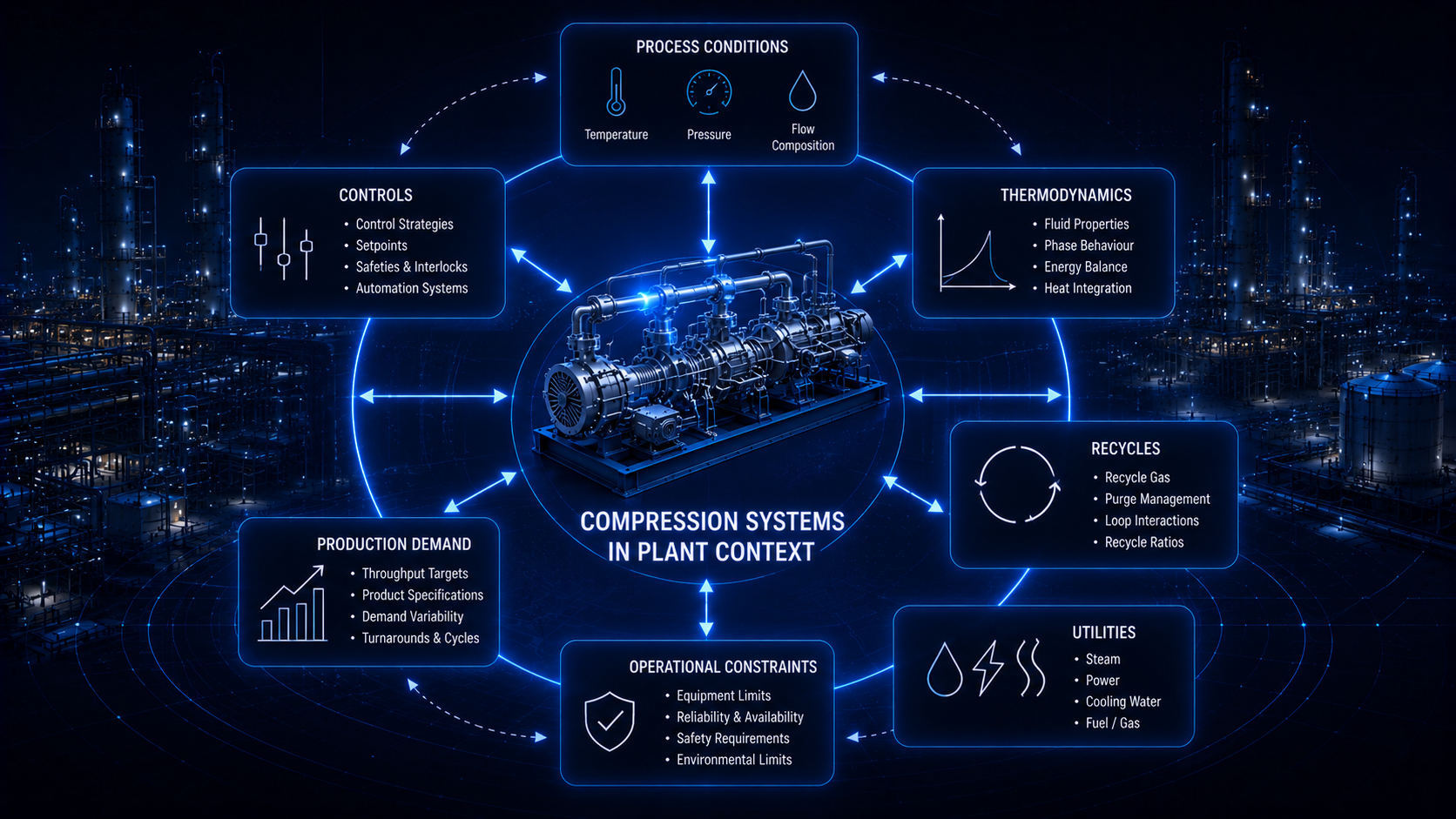
Compression Performance Across the Complete System
Compression performance is determined by the interaction of casing arrangements, compression stages, drivers, anti-surge controls, recycle paths and the connected process plant. Changes in gas composition, suction conditions, discharge requirements or production demand can propagate across multiple casings and trains, altering head, efficiency, power, operating limits and available capacity.
Simulytica evaluates these interactions through the thermodynamic and engineering state of the complete system. Machinery calculations remain connected to process conditions, control response and recycle operation, allowing engineers to determine where performance is being constrained and how changes affect compression and production across the plant.
Compression performance is determined across the system, not at a single operating point.
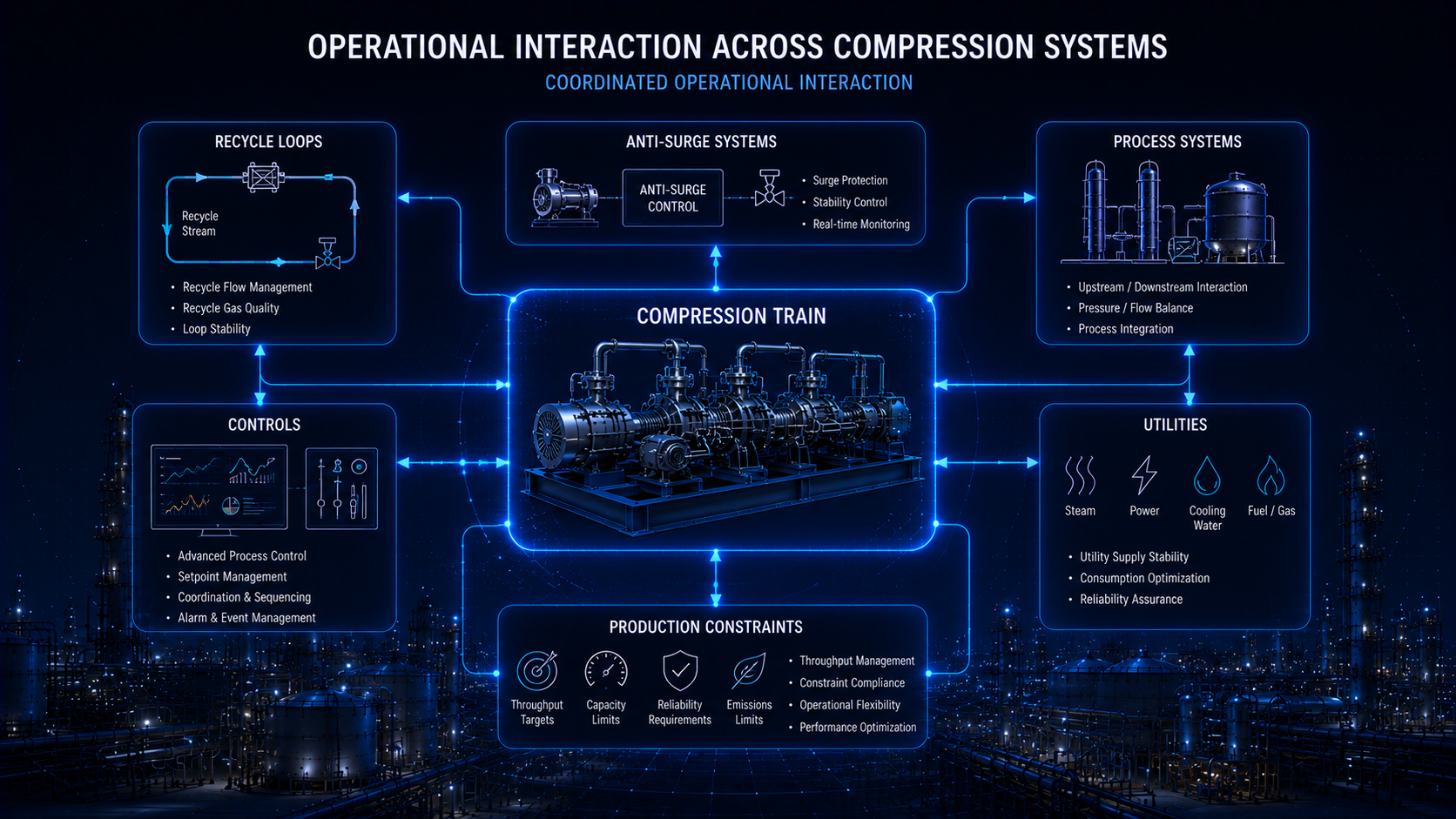
Compression Performance Directly Affects Production
Compression systems respond to upstream production, process routing and downstream demand while determining throughput, pressure availability, energy consumption and operating flexibility across the plant.
A constraint, control response or trip within one part of the compression system can change conditions throughout connected production and processing systems. Changing plant requirements can also move machinery towards power, speed, discharge-temperature or surge limits.
Evaluating both directions of interaction allows engineers to determine whether performance is limited by the machinery, its controls, the connected process or the wider operating strategy.
The plant determines compression demand. Compression determines plant capability.
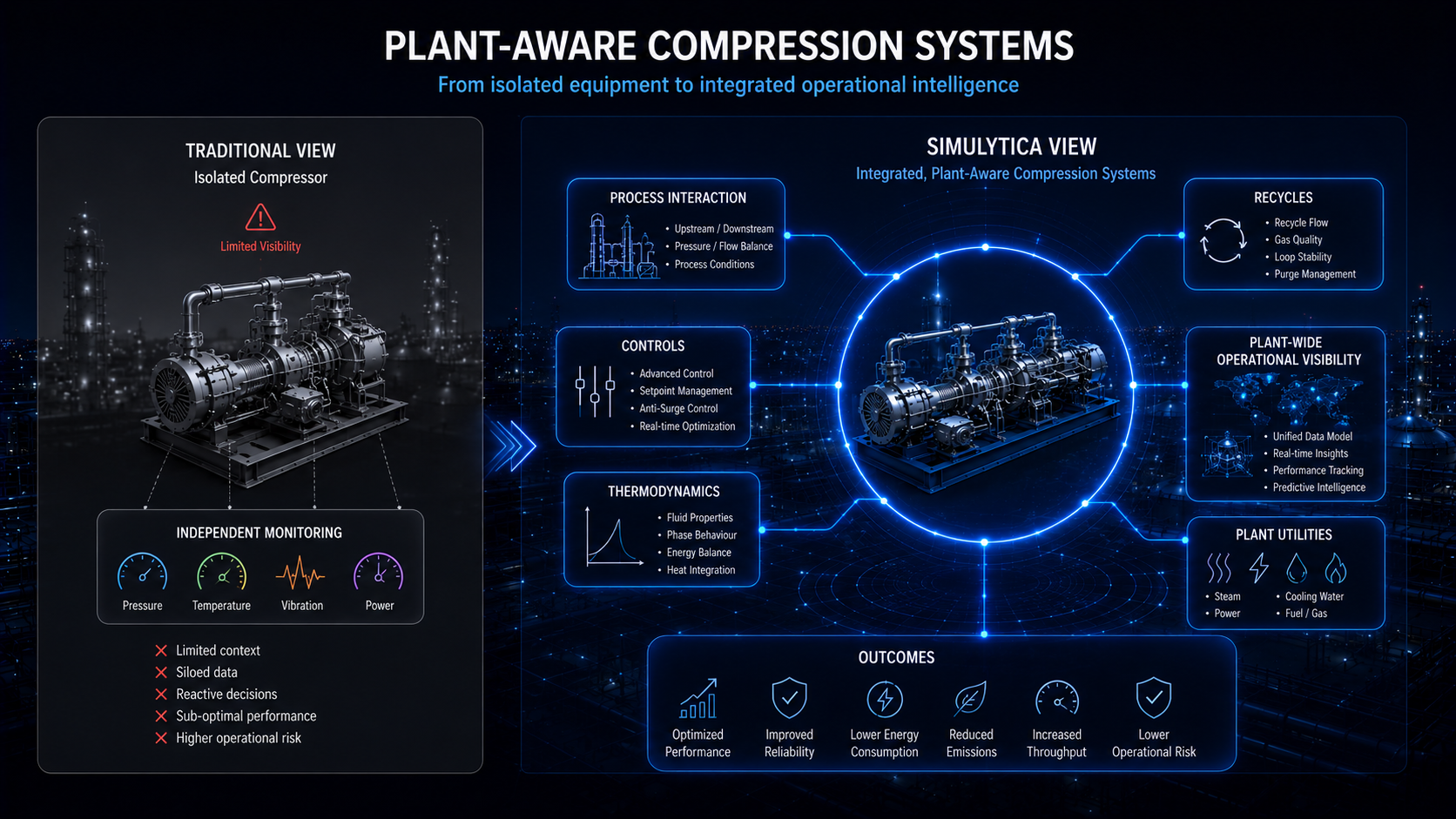
Machinery Performance Within Plant Operation
Simulytica combines measured operation with calculated machinery and plant state, continuously evaluating casing, train and compression-system performance within the conditions affecting production.
Operators gain current insight into performance, operating limits, constraints and production impact. Engineers can examine operating events, compare machinery and plant states, investigate control and recycle responses, and evaluate alternative operating strategies.
This shared engineering basis connects day-to-day performance monitoring with deeper engineering analysis without separating machinery from the process plant around it.
Machinery insight connected directly to plant operation.