Plant Systems Are Connected. Industrial Software Often Is Not.
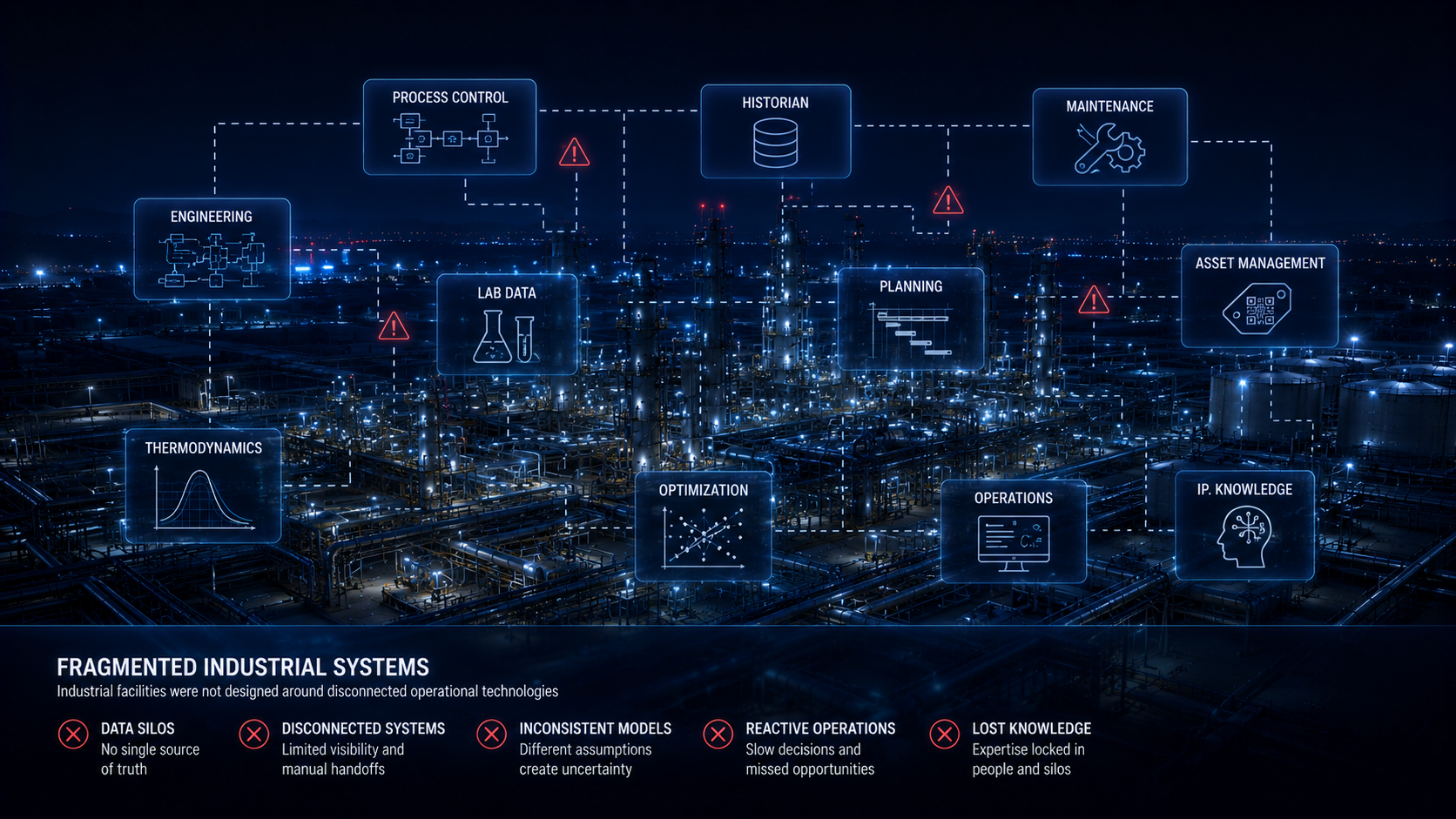
Industrial facilities operate as connected systems, yet the software supporting them is often divided across simulation, monitoring, control, historian, OEM and engineering applications.
Each technology can provide valuable information within its intended scope. The limitation becomes apparent when engineers and operators need to determine how a change in one area affects equipment, controls, constraints and performance elsewhere in the facility.
Exchanging data between applications does not create a continuously calculated engineering representation of the plant or preserve the relationships that determine its behaviour.
Connecting plant data is not the same as representing plant behaviour.
Local Changes Create Wider Plant Effects
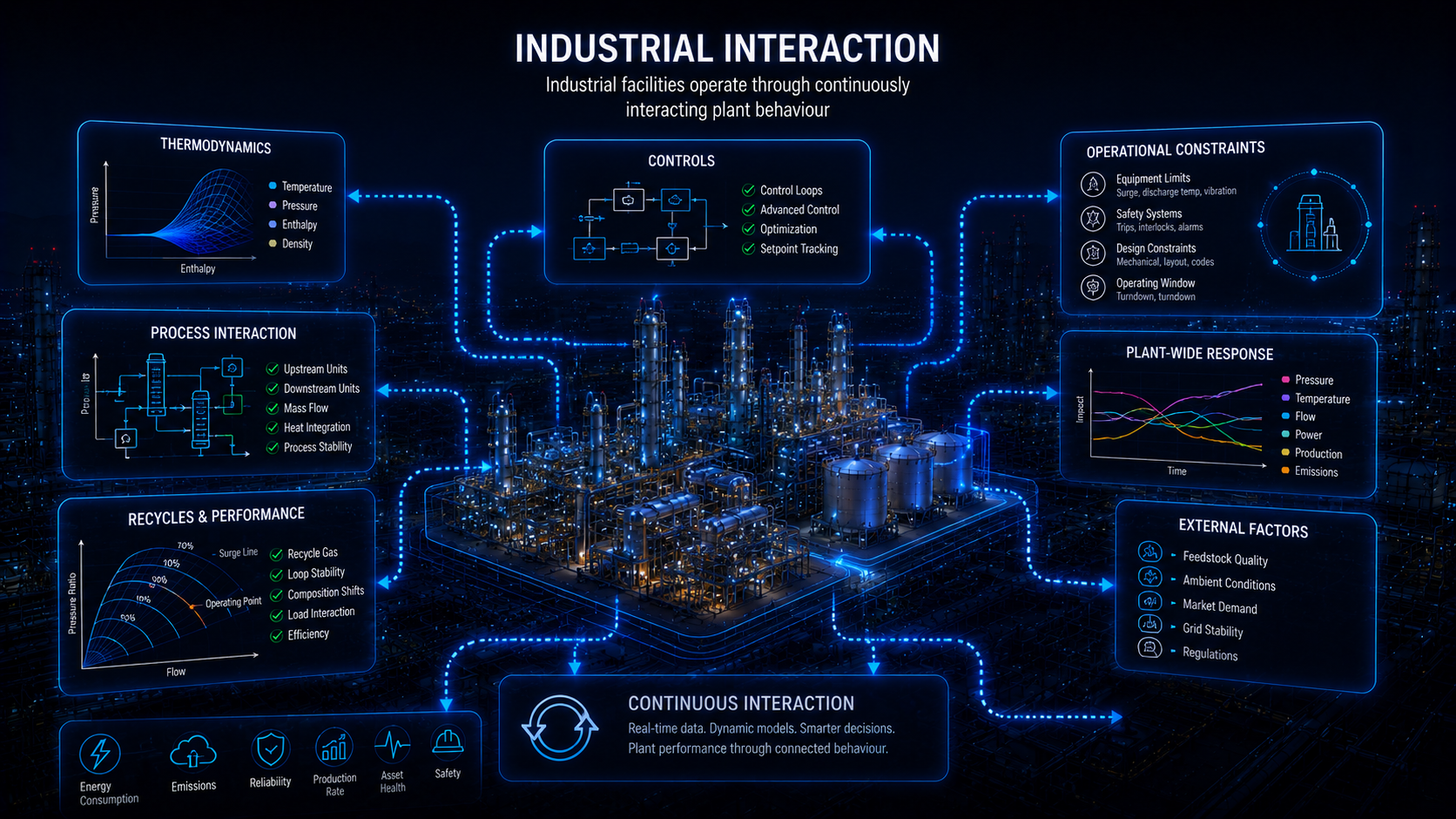
Plant behaviour develops through continuous interaction between operating conditions, equipment, controls, utilities and recycles. A change in one part of the facility can alter constraints, efficiency and production elsewhere.
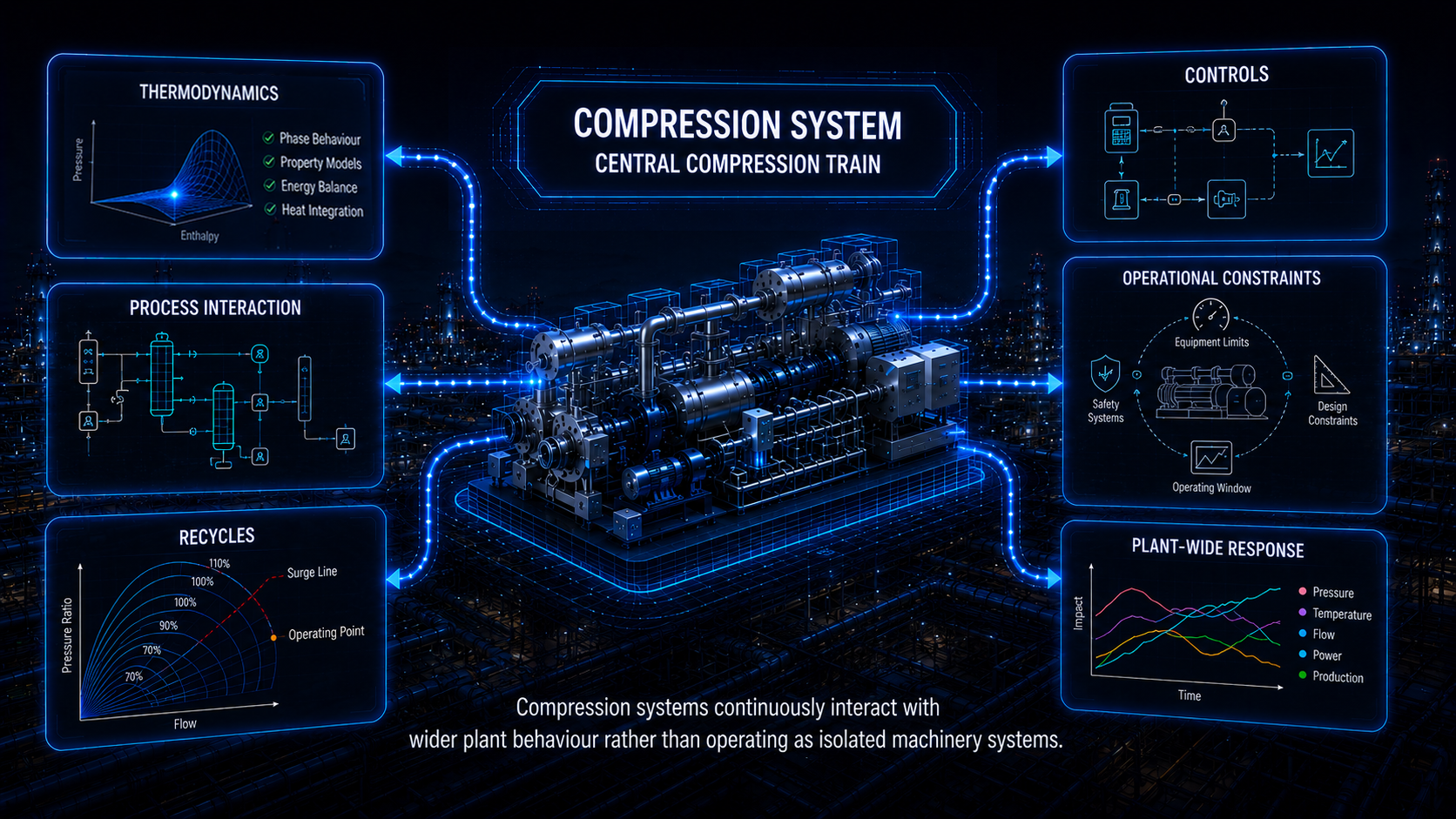
Compression systems demonstrate this particularly clearly. Changes in suction conditions, downstream demand, control response or recycle operation can shift compressor operating points, driver load and available production capacity.
The influence also travels in the opposite direction. A compressor constraint, control response or trip can propagate through connected process systems and change the operation of the wider facility.
Equipment performance must be understood within plant context.
- Machinery performance
- Production capability
- Operational efficiency
- Operating limits
- Plant response
- Wider process interaction
Plant behaviour continuously evolves across wider operational interaction.
Every Connection Must Retain Its Engineering Meaning
Representing a plant requires more than connecting equipment symbols or exchanging values between software components. Process, control, mechanical and electrical connections carry different engineering information and influence plant calculations in different ways.
Preserving these connection semantics throughout execution allows equipment interactions, control responses and complex nested recycles to be evaluated as part of the operating plant. Intelligent adaptive solvers can then converge those interactions automatically while calculations execute in parallel.
The resulting calculated state reflects both the structure of the facility and the engineering behaviour of the connections within it.
This becomes particularly difficult across:
- Compression trains
- Recycle interaction
- Anti-surge systems
- Process constraints
- Thermodynamic interaction
- Plant-wide operational response
- Remote and unmanned facilities
Plant connectivity is engineering behaviour, not simply structure.
Understanding More Than Plant Measurements
Plant measurements describe observable operating conditions at specific locations. Engineering calculations determine the non-measurable variables, equipment performance and interconnected responses required to understand the wider facility.
Simulytica evaluates measured operation alongside continuously calculated plant state within one engineering system. Changes can be assessed across equipment, controls and recycles to determine their effect on constraints, efficiency and production.
Operators gain current insight into plant performance, while engineers can investigate what changed, examine the interactions driving it and evaluate alternative operating scenarios.
Measurements describe operation. Calculated engineering state provides the wider context.
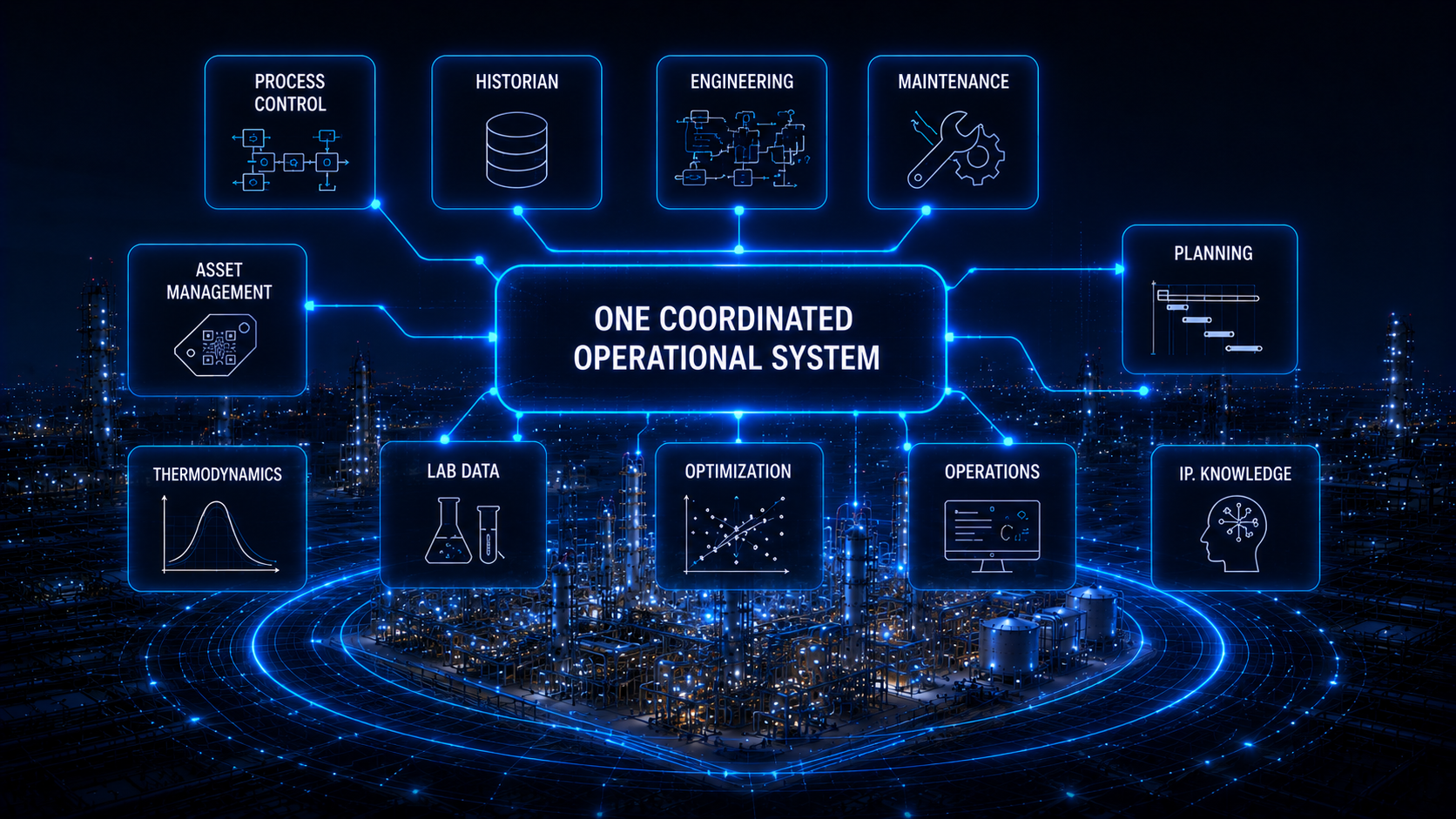
Continuously Executing Engineering Makes Digital Twins Viable
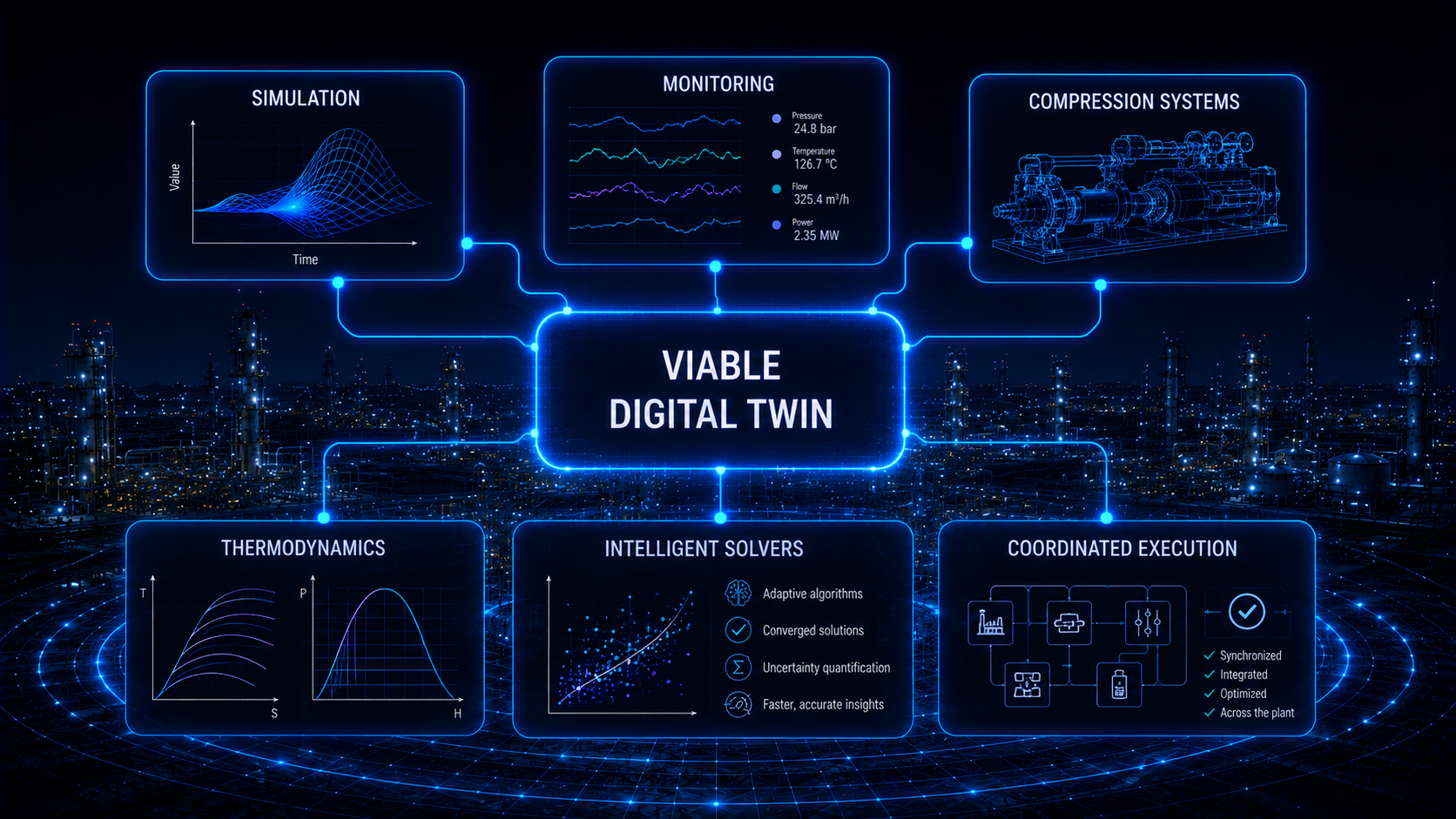
The term digital twin can describe anything from a 3D model or equipment database to a connected data platform. For engineering and operational use, however, the system must calculate how the plant behaves as operating conditions change.
A viable digital twin requires maintained engineering state, automatic convergence and scalable execution across the required facility scope. Simulation, monitoring and engineering investigation must operate from a plant representation that continues to reflect equipment, controls and recycle interactions.
Simulytica provides this continuously executing engineering foundation, allowing digital twins to support projects, operating facilities and ongoing plant investigation without assembling multiple disconnected technologies.
A digital representation becomes viable when it can continuously calculate how the plant operates.