
Scalable Engineering Systems
From Individual Equipment to Complete Facilities
Simulytica technology scales from individual equipment and compression systems through sub-plants and process plants to complete facilities, preserving a plant-first representation as the scope expands.
Begin with a Defined Requirement
A Simulytica system can begin around individual equipment, a compression system, refrigeration sub-plant or another defined part of the facility, delivering engineering or operational capability where it provides immediate value.
Systems can operate as standalone applications or integrate with customer software environments. As requirements expand, the system extends across connected equipment, sub-plants and wider facility operation without replacing the original application or rebuilding established engineering capability.
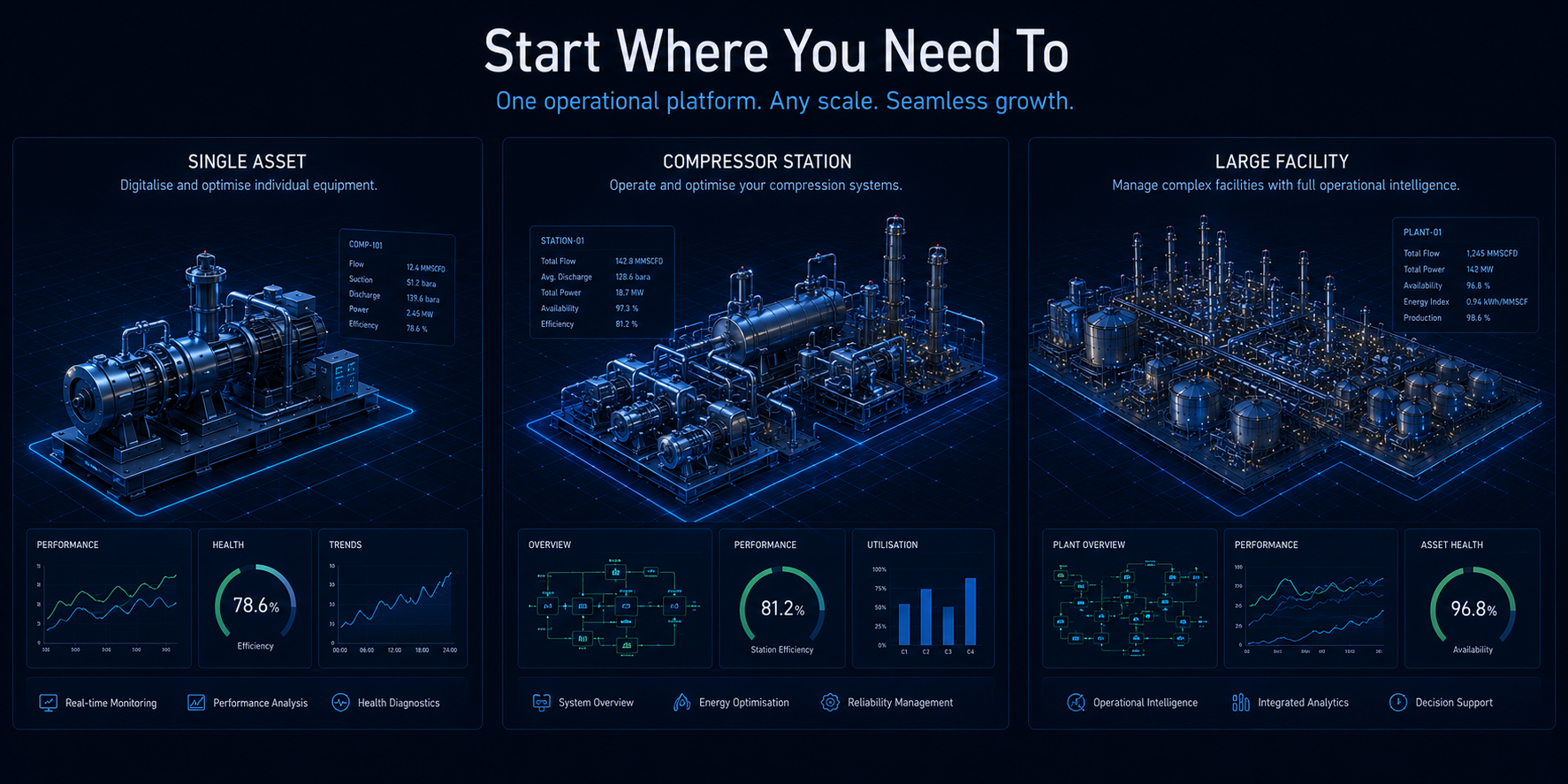
Built for the Scope You Need
Begin with a defined application and extend into wider plant capability without replacing what has already been established.
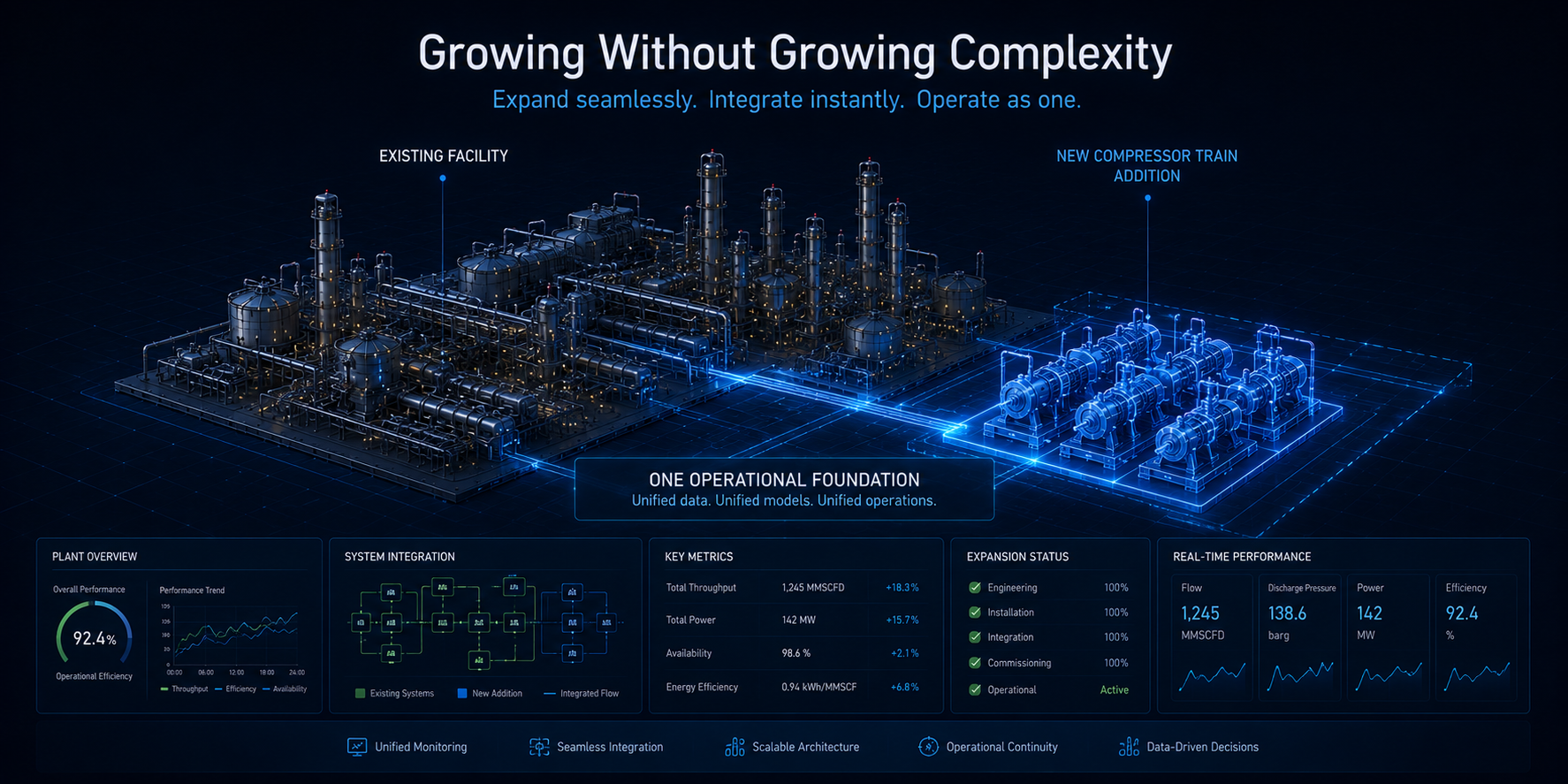
Extend Capability Without Adding Complexity
As plant scope expands, Simulytica extends established engineering and operational capability across additional equipment, sub-plants and wider facility operation.
Scalable, parallel technology supports increasing computational demand, while new capabilities become part of the established system without introducing a separate application and integration layer for each requirement.
Evolve the System with the Facility
As engineering projects, equipment changes, operational optimisation and plant expansion alter facility requirements, Simulytica adapts the established plant representation and applications without replacing the engineering work already delivered.
Simulytica supports each system from initial deployment through continuing operation and future extension, applying its engineering and industry expertise as requirements develop.
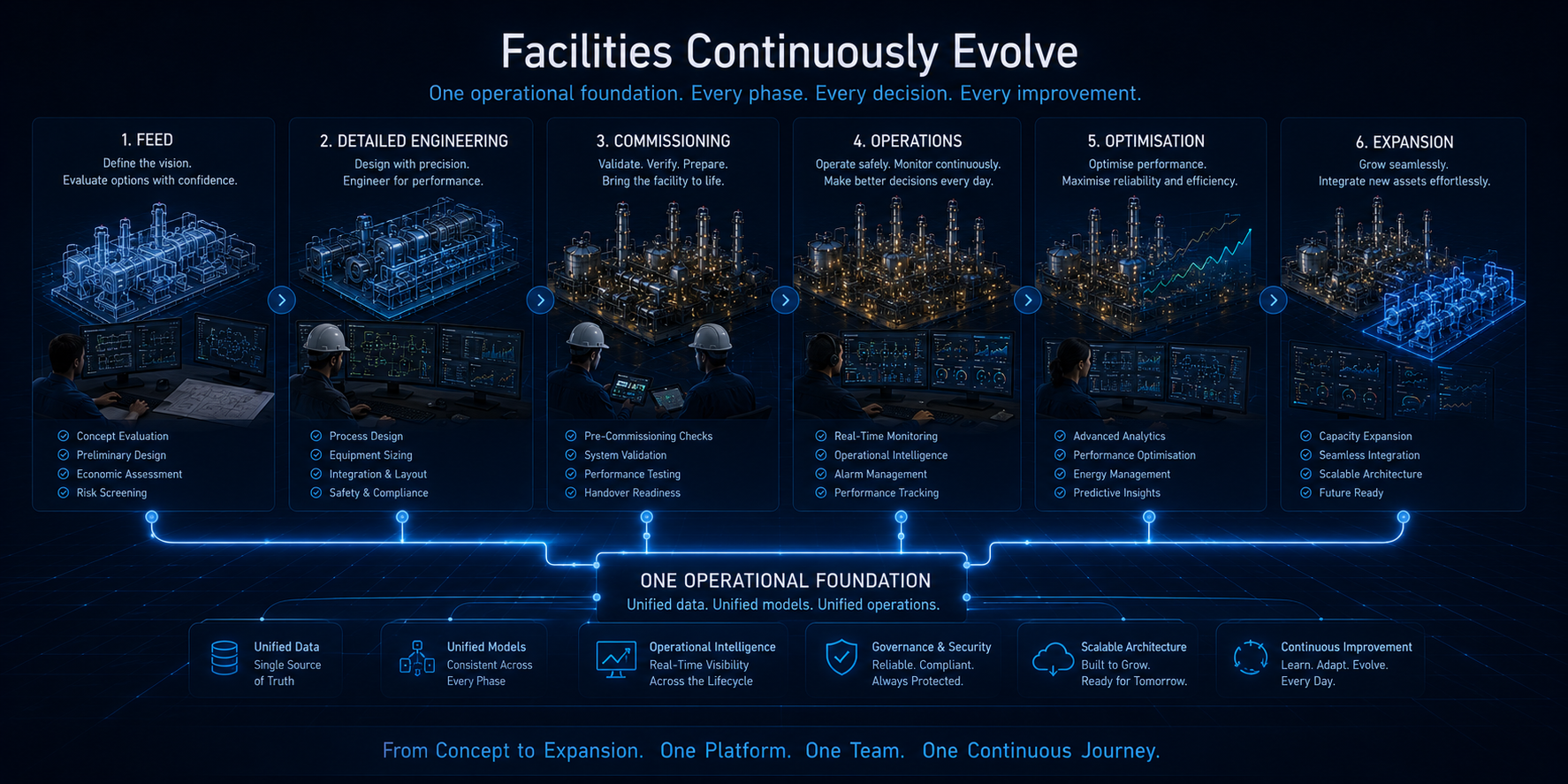
Start at the Right Scale
Discuss a Simulytica system built around an individual asset, sub-plant, project or complete facility, with the flexibility to extend as engineering and operational requirements develop.